You can know you're safe and still not feel safe.
That was probably one of the most confusing things for me when I was dealing with anxiety.
Nothing was actually happening. I could logically tell myself I was fine. I could try to rationalise every feeling I was having.
But my body wasn't listening.
Heart racing. Constantly on edge. Overthinking everything. Feeling weirdly disconnected at times. Even when I was supposed to be relaxing, I didn't really feel relaxed.
This is where understanding the nervous system started to make a lot more sense to me.
You've probably heard the term “dysregulated nervous system” everywhere lately. It's become a bit of a buzzword online, but there is a useful idea underneath it.
Basically, your nervous system is constantly responding to what's happening around you and inside you. When it becomes difficult to move out of stress and back towards a more settled state, people often describe this as nervous system dysregulation.
It's not a medical diagnosis and it doesn't mean there's something “wrong” with you.
But it can help explain why sometimes knowing you're okay and actually feeling okay are two very different things.
What does a dysregulated nervous system feel like?
It can show up differently for everyone.
For me, anxiety was very physical.
And that's something I think gets missed when we talk about anxiety as if it's purely something happening in your head.
You might notice things like:
Racing thoughts
Feeling constantly on edge
Tightness or tension in your body
A racing or pounding heart
Feeling restless
Finding it really difficult to switch off
Trouble sleeping
Feeling overwhelmed by small things
Constantly needing distraction
Feeling like you can't properly relax
But it doesn't always look like being anxious and wired.
Sometimes it can look more like:
Feeling exhausted
Brain fog
Feeling disconnected from yourself
Low motivation
Feeling emotionally flat
Wanting to withdraw from people
Feeling like you're just going through the motions
And you can move between these states too.
You might spend days feeling completely wired and then suddenly feel absolutely wrecked.
Why do I feel anxious when nothing is actually wrong?
This question used to drive me mad.
Because I'd look around and think:
I'm literally fine. So why does my body feel like something is wrong?
Your autonomic nervous system controls loads of processes that happen without you consciously thinking about them, including changes in heart rate, breathing and digestion.
When your brain detects something it interprets as threatening or demanding, your body can shift into a more activated state.
Obviously that's useful if you're in genuine danger.
But “threat” doesn't only mean a bear chasing you.
Work stress. Lack of sleep. Relationship problems. Uncertainty. Social pressure. Memories. Constant stimulation. Even your own thoughts can contribute to your stress response.
And if you've been stressed or anxious for a long time, simply saying “calm down” to yourself usually isn't very helpful.
I know because I tried.
A lot.
Can you think your way out of nervous system dysregulation?
Thoughts matter. A lot.
I'm definitely not saying that working with your thoughts isn't important. Therapies such as CBT have good evidence behind them and can be hugely helpful.
But I also don't think everything has to start in your head.
Think about the last time you were really nervous.
Maybe before an interview, a first date, a presentation or something you really cared about.
Your heart might have started beating faster.
Your palms might have become sweaty.
Your breathing changed.
Your stomach felt weird.
Your shoulders tightened.
You didn't sit there and consciously decide:
Right, time to increase my heart rate.
Your body just responded.
That's why I'm so interested in body-based approaches.
If the mind can affect the body, it makes sense to also explore how working with the body can affect how we feel.
Breathing, movement, grounding and bringing attention back into physical sensations can all give you another way of working with your state rather than trying to analyse your way out of everything.
A regulated nervous system doesn't mean being calm 24/7
This is something I think social media gets completely wrong.
The goal isn't to float around Dublin in some permanently zen state where nothing bothers you.
You actually need stress.
You need activation to train in the gym, perform at work, have difficult conversations, exercise, focus and deal with challenges.
Regulation is more about flexibility.
Can your system activate when something requires it?
And when that thing is over, can it settle again?
That's very different from trying to eliminate stress completely.
How can you regulate your nervous system?
There isn't one magic nervous system hack.
I know that's less exciting than telling you to do one breathing technique for 30 seconds and completely transform your life, but it's true.
There are, however, really simple things you can experiment with.
1. Slow your breathing down
Your breathing is one of the few things happening automatically that you can also deliberately change.
Try breathing gently rather than taking massive “deep breaths.”
You can experiment with making your exhale slightly longer than your inhale and see how your body responds.
It shouldn't feel forced.
2. Get out of your head and into your surroundings
When I'm talking about grounding, I don't mean anything complicated.
Look around.
Actually notice where you are.
Notice what you can see. What you can hear. Feel your feet against the ground.
When you're stuck analysing every sensation and thought, sometimes bringing your attention outside yourself is useful.
3. Move your body
Regulation doesn't always mean lying on a yoga mat.
Walk.
Train.
Stretch.
Do Qi Gong.
Go outside.
Sometimes sitting still trying desperately to “feel calm” just makes you more aware that you don't feel calm.
Movement can be another way in.
4. Give yourself actual space to do nothing
This is one I'm guilty of too.
You finish work and technically you're “resting,” but you're scrolling TikTok, answering messages, watching something, checking Instagram and consuming information constantly.
Your body might be sitting on the couch.
That doesn't necessarily mean you're giving your brain much of a break.
Even going for a walk without constantly consuming something can feel surprisingly different.
5. Look at the boring stuff too
Sleep matters.
Food matters.
Movement matters.
Your relationships matter.
How much caffeine you're drinking matters.
How much alcohol you're drinking matters.
Your workload matters.
No breathing technique is going to magically cancel out a lifestyle that is constantly running you into the ground.
Nervous system tools aren't a replacement for proper support
I love breathwork and body-based practices. They're literally a huge part of the work I do.
But I also don't like the way some wellness content makes every problem sound like something you can fix with a 60-second nervous system “hack.”
Sometimes a breathing exercise is exactly what you need in that moment.
Sometimes what's going on is bigger than that.
If anxiety, panic, low mood, trauma-related symptoms or unexplained physical symptoms are significantly affecting your life, speak to an appropriately qualified healthcare professional.
Breathwork and other body-based practices can potentially complement that support rather than replacing it.
Why I work with the body
My interest in all of this didn't start because I thought nervous system regulation was a good niche.
It started because I needed it myself.
I spent a long time trying to understand why I could logically know I was okay while my body seemed to be telling me something completely different.
Learning to work with my body rather than constantly fighting against what I was feeling changed how I approached my own wellbeing.
And it's a big part of why I now do the work I do.
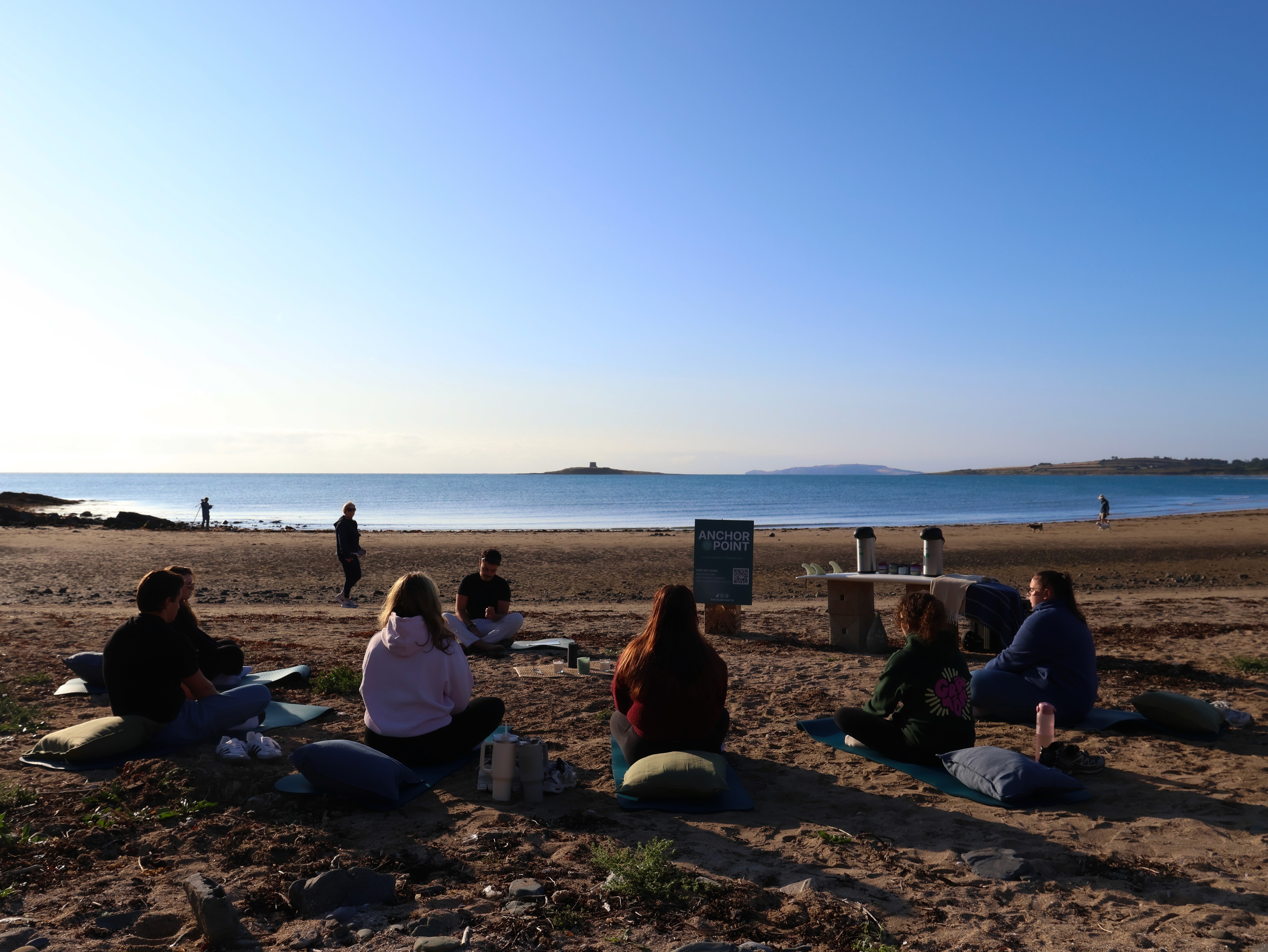
At Anchor Point, I work with breathwork, bio-energy and other body-based practices to help people slow things down, reconnect with themselves and create some space from the constant noise.
If you're curious about going deeper than the tools you see online, you can read more about my 1:1 breathwork and bio-energy sessions in Dublin, or get in touch and we can figure out what approach makes the most sense for you.